Learning how to prevent mold from window condensation is essential for maintaining a healthy Utah home during the cold winter months.
What Is Sweating?
Sweating is when warm moist air meets a smooth, cool surface. This is also known as condensation. It is the same process that causes the outside of your glass of Diet Coke to become moist.
If you have a problem with the windows in your home sweating, you may think the problem is with the windows. However, that may not be the case.
A simple wall hygrometer can tell you the humidity level inside your home. Humidity levels in your home should be between 30 to 50 percent (lower when the temperature outside is colder). When humidity levels exceed this, you will start to see condensation or sweating on your windows.
Alpine Cleaning & Restoration has a few simple suggestions below to keep humidity levels in your home lower and to prevent your windows from building up condensation.
How to Prevent Mold from Window Condensation: Quick Tips
1. Open the windows and doors to let your house breathe when the temperature allows it. Poor air circulation and lack of ventilation causes high humidity. When you open a window or door, it equalizes air in your home with the outside.
2. Check that your clothes dryer exhaust hose is free of debris and that it is properly vented to the outside and not the attic. Ensure that vent ducts as short as possible and seal them with foil/duct tape or caulk to ensure that the moisture exits your home.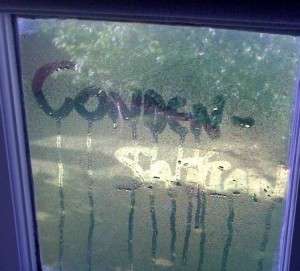
3. Always turn on a fan when cooking. Also try to minimize cooking times.
4. When showering turn on the exhaust fan and take shorter showers with cooler water.
5. Place a fan blowing onto the window to evaporate the liquid and put it back into the air. Of course, this will only work as long as the fan is turned on. You can also wipe the windows to remove the moisture. This will help prevent mold from growing.
6. Cover windows with plastic film or interior storm windows. Doing so will provide a layer between the moist warm air and the cold surface.
7. Setting your thermostat lower will reduce the temperature difference between the air and the glass. Temperatures between 66 to 68 degrees are most effective.
Effective Ways to Eliminate Humidity and Moisture Problems Indefinitely
Excess moisture in your home can lead to condensation, mold growth, and a host of other problems that affect both your property and your health. Here are proven ways to address these issues and keep your home dry and safe for the long term:
-
Install Exhaust Fans in Key Areas
Bathrooms, kitchens, and laundry rooms are the primary sources of indoor moisture. Installing exhaust fans in these areas can help remove excess humidity effectively. For best results, consider installing a timer so the fan continues to run for 15 to 20 minutes after you shower or finish cooking. This ensures that lingering moisture is fully vented. In laundry areas, running the fan while the dryer is operating or immediately afterward can prevent mold from developing. -
Upgrade to Double-Paned or Storm Windows
Single-pane windows often allow condensation to form on the glass, which can drip onto window sills and walls. Investing in double-paned or storm windows helps insulate your home and reduces condensation significantly. If you still notice moisture around the windows, inspect the edges for gaps and use caulk or weather stripping to seal them completely. This additional layer of protection keeps your home more energy-efficient while controlling indoor humidity.
-
Seal Windows and Other Openings
Properly sealing your windows is essential for long-term moisture control. Use high-quality caulk around the window frame, then add spray foam or weather stripping to close any remaining gaps. Don’t forget to check other areas where moisture might enter, such as door frames, vents, or attic hatches. Effective sealing keeps humid outdoor air from infiltrating your home and prevents warm indoor air from condensing on cold surfaces. -
Control Indoor Plants and Aquariums
While plants and aquariums can improve your home’s aesthetics, they also contribute to indoor humidity. Too many plants or large aquariums can elevate moisture levels and create the perfect environment for mold growth. Reduce the number of indoor plants or space them out, and water them less frequently. If you have an aquarium, ensure it is properly covered and consider using a dehumidifier nearby to counteract excess moisture. -
Use a Dehumidifier with a Humidistat
Maintaining an ideal humidity level of 30–50% is key to preventing condensation and mold growth. Invest in a dehumidifier equipped with a humidistat, which automatically adjusts its operation to maintain the optimal humidity level. Dehumidifiers are especially effective in bathrooms, basements, and other areas prone to high moisture. Regularly empty and clean the dehumidifier to ensure it operates efficiently. -
Monitor for Wall Condensation and Mold
Even after taking preventive steps, some areas may still experience condensation or mold growth. Regularly inspect walls, corners, and ceilings for signs of moisture. If you notice persistent issues, it’s best to seek professional help.


For persistent problems with wall condensation, mold, or excess humidity, contact Alpine Cleaning and Restoration at 1-855-4ALPINE to get a free estimate and expert guidance on mold remediation. Protect your home, improve indoor air quality, and enjoy a safer, healthier living environment.